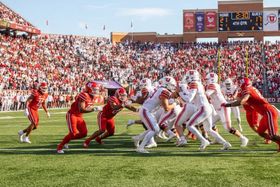
The Complete College Football Betting Guide
Saturdays are the best days in football, and the board proves it. From a top-ranked powerhouse laying 30 on a rival to a Heisman race that runs all fall, college football hands you a bigger, wilder canvas to bet than the pros. This guide is your home base: every way to bet college football, how the odds work, and the strategy that turns a fall Saturday into your sharpest day of the week. Each market links out to a full breakdown, so you can start broad here and go as deep as you want. Explore the full College Football Betting Odds board at BetWhale, where online sports betting stays simple no matter how far you take it.


Published August 21, 2026
College Football Betting at BetWhale
College football is one of the most bet sports in America, and it plays nothing like a tidy pro league. A huge field of programs, wide talent gaps, and up-tempo offenses create lines you will not find anywhere else. At BetWhale, every ranked showdown and every Group of Five upset bid opens with a full board: spreads, moneylines, totals, props, and futures, all moving through the week as lineup news and betting action roll in.
You will find markets for nonconference tune-ups, conference play, championship week, bowl season, and the College Football Playoff, plus live odds that keep running after kickoff. Work through the sections below to learn how each bet type functions in the college game, then build your card on the NCAA board.
How College Football Odds Work
Before you pick a market, you need to read the numbers. College football odds use the American format, shown with a plus or a minus. A minus number marks the favorite and shows how much you stake to profit $100, so -150 risks $150 to earn $100. A plus number marks the underdog and shows how much you profit on a $100 stake, so +130 returns $130. The odds scale to any amount, and your bet slip shows the potential return the moment you enter a stake.
The big difference from the pros is range. Because the talent gap between programs can be enormous, college spreads and totals swing far wider than in the NFL. A powerhouse can be favored by four or five touchdowns over a smaller opponent, and totals can sit anywhere from the low 30s for two stout defenses to the 70s and 80s when two up-tempo offenses meet. That variance is exactly where a sharp read finds value.
College Football Bet Types at a Glance
Here is the full board in one view before we get into each market.
Bet Type | What You Are Betting On | Best For |
|---|---|---|
Point Spread | The margin of victory | The core college market is a huge favorite |
Moneyline | The team that wins outright | Backing live underdogs at plus odds |
Total (Over/Under) | Combined points scored | Reading tempo and mismatches |
Player & Team Props | An individual or team stat line | Depth-chart and matchup knowledge |
Futures | A season-long outcome | Title, conference, and Heisman reads |
Parlay | Several bets on one ticket | Bigger returns at higher risk |
Teaser | Adjusted spreads across games | Buying points around key numbers |
Live | In-play markets during the game | Reacting to momentum |
College Football Point Spread Betting
The point spread is the heartbeat of college football betting. It handicaps the favorite by a set number of points: the favorite has to win by more than the spread to cover, while the underdog can lose by less than the spread, or win outright, and still cover. Because of the sport's lopsided matchups, college spreads run big, and a double-digit or even four-touchdown line is common.
That range is what makes reading a spread so important here. The mechanics are identical across football, so our guide on how NFL point spreads work breaks down the math and key numbers, then applies them to the broader college board.
College Football Moneyline Betting
The moneyline strips it back to one question: who wins the game, regardless of margin. Favorites carry minus odds and cost more to back, while underdogs carry plus odds and return more on the same stake. In college football, heavy favorites can sit at very short prices, so the moneyline shines most when you fancy a live underdog to pull the outright upset.
For the full walk-through on reading prices and figuring your return, see our NFL moneyline betting guide, which covers the same format you will see on every college matchup.
College Football Over/Under (Totals) Betting
A total, or over/under, is a bet on the combined points both teams score. You are not backing a side; you are just reading how the game will flow. College football is a total paradise: tempo varies wildly, and a matchup of two spread offenses can sail past a number that would be unthinkable in the pros.
Under BetWhale's rules, football totals settle on regulation time unless the market expressly includes overtime, so always check how a line is listed before you place it. Our NFL over/under betting guide covers how totals are set and what moves them, and the full betting rules page spells out how each market is graded.
College Football Player and Team Props
Props are where the college game truly opens up. Player props focus on one athlete's stat line, from a quarterback's passing yards to an anytime touchdown, while team props cover output like team totals, first-half results, and the highest-scoring quarter. With wide talent gaps and young players breaking out fast, the college props board runs deeper and moves quicker than most.
This is the one market with a full college-specific deep dive. Our college football prop bets guide walks through the best player, team, and game props, how the odds work, and how to read a line before kickoff.
College Football Futures: Title, Conferences, and the Heisman
Futures are long-term bets that settle weeks or months out rather than on a single game, and college football has some of the best on the board. The headline market is the national championship, but it runs deep: conference winners, each team's regular-season win total, and reaching or advancing in the College Football Playoff bracket.
The Heisman Trophy market is a college staple all its own, a season-long race on the sport's top player that shifts every Saturday. The appeal of any future is value and timing. Prices move all season, so a side you back in the preseason can look very different by November. Lock in a number you like early and it holds until the market settles. Futures tie up your stake for a while, so treat them as a small, patient part of your card.
College Football Parlay Betting
A parlay ties multiple bets into one ticket for a bigger return. Every leg has to hit for the parlay to pay, which raises both the risk and the reward. A packed Saturday slate makes college football a natural fit: you can stack spreads across the ranked matchups, mix a moneyline with a total, or build a same-game parlay from one game.
Discipline matters because more legs mean longer odds against you. Learn how to build smarter tickets and where the value hides in our NFL parlay betting strategy and tips, which applies to the college board the same way.
College Football Teaser Betting
A teaser is a parlay variation that lets you move the spread or total in your favor across two or more games, in exchange for a lower payout. Given how often college lines land on or near key numbers, teasers can be a useful tool for nudging a shaky spread into stronger territory.
See how to spot the strongest teaser legs and when the trade-off is worth it in our NFL teaser betting guide.
College Football Live Betting
The board does not close at kickoff. Live betting keeps college football markets running through all four quarters, with odds that move on every drive, turnover, and score. College games are famously volatile, so a pregame favorite that stumbles early can suddenly offer plus-odds value.
Live betting rewards patience and a fast read on momentum. Our NFL live betting guide shows you how to find in-play value without chasing, and the same approach works on any Saturday.
Bowl Season and the College Football Playoff
The college postseason is a betting event unto itself. Bowl season stacks dozens of matchups across December and January, and the College Football Playoff bracket runs the best teams down to the national championship. Smaller slates, sharper lines, and higher stakes on every snap make the postseason a different animal from the regular season.
One factor stands above the rest: motivation. Some teams treat a lower-tier bowl as a reward, while others rest starters, and player opt-outs, where athletes sit out to protect their pro futures, can gut a roster and move a line hard. Always check who is actually playing before you bet a bowl. Want more football on your card while the college slate quiets down? The NFL board runs the same markets on Sundays.
Home-Field Advantage in College Football
Nowhere is home-field advantage bigger than in college football, and it shows up right in the price. Oddsmakers bake it into the spread before you see it, worth roughly a field goal for a typical venue and more for the loudest environments. Enormous student sections, long cross-country trips, altitude, and rosters full of young players who rattle on the road all stack the deck for the home side.
It moves the moneyline and totals too, and it swings hardest in rivalry and prime-time night games while disappearing entirely at neutral sites and bowls. Reading the venue, not just the ranking, is one of the sharpest edges on the Saturday board. Our college football home-field advantage guide breaks down exactly how crowd, travel, and environment shift the odds.
College Football Betting Strategy and Tips
No approach beats the book over the long run, and no bet is a lock. What good habits do is help you find value and protect your budget so the season stays fun. A few that matter most in the college game:
- Know the depth chart. College rosters turn over every year and shift week to week. A confirmed starter is worth more than a projection, and opt-outs matter in bowl season.
- Respect the mismatch. A top program against a smaller opponent can bury a team total or blow past a game total. Big spreads are big for a reason.
- Read the motivation. Rivalry games, letdown spots after a huge win, and lookahead traps before a marquee matchup all move outcomes more than the raw talent suggests.
- Watch the weather. Wind and rain drag down passing props and push run-heavy game scripts, especially late in the year.
- Shop the number. College lines vary more from open to kickoff than pro lines. Always take the better price when you have it.
- Manage your budget. Set an amount you are comfortable risking, size bets consistently, and never chase a rough Saturday. Treat every card as entertainment, not income.
The College Football Betting Calendar
College football betting runs almost year-round, and each stretch plays differently.
Nonconference and early season. From late summer into September, tune-up games and big mismatches produce soft, wide lines. Great for props and totals, tougher for spreads.
Conference play. Through October and November, ranked matchups and rivalry games tighten the board and sharpen the lines. This is the heart of the season.
Championship week. In early December, conference title games decide seeding and shake up the futures market in a single weekend.
Bowl season and the Playoff. From mid-December into January, the postseason brings opt-outs, motivation reads, and the College Football Playoff run to the national championship.
Futures markets stay open across all of it, and offseason recruiting and spring practice keep the preseason title, conference, and win-total boards moving even when no games are on.
Betting on College Football on Mobile
You do not need an app to bet on college football at BetWhale. There is nothing to download and nothing to install. The browser-based sportsbook runs on any phone, tablet, or desktop, and you can use Add to Home Screen for a one-tap shortcut that feels like an app without taking up space.
Everything works the same on mobile as on desktop: the full Saturday board, live in-play markets, your bet slip, deposits, and payouts. That means you can build your card during the week and adjust live from anywhere the games take you.
College Football Betting Bonuses
New players can claim a sportsbook welcome bonus of 200% up to $6,000, which matches your first deposit to give your college football bankroll a serious head start. The same offer applies across every sport, and the casino welcome offer is separate, claimed on a different deposit.
BetWhale also runs a Bet Club reload for existing players: bet $100 and get a $25 free bet, or bet $200 and get a $50 free bet. Qualifying single, combo, or parlay bets need to total $100 or more at minimum odds of +100 (2.00) to earn the free bet reward, which fits a packed Saturday slate perfectly.
Every offer carries wagering requirements and its own terms, so read the fine print before you opt in and treat any bonus as a boost to your play rather than a sure thing. Offers change often, so check the lobby or contact support to see what's live right now. You can review deposit and payout options, including faster crypto methods, on the banking page. T&Cs apply to all promotions.
How to Start Betting on College Football at BetWhale
- Sign up for a BetWhale account and complete quick identity verification. Getting it done early speeds your first payout.
- Make a deposit. Traditional cards work, and crypto options like Bitcoin, Ethereum, and USDT process faster on the way out.
- Pick your matchup and your market: spread, moneyline, total, prop, future, parlay, or teaser.
- Add your selection to the bet slip, enter your stake, and confirm. The slip shows your potential return before you lock it in.
Want to go deeper on a market first? Browse the college football guides for the full breakdowns
Frequently Asked Questions
What is the easiest college football bet for beginners?
The moneyline and the point spread are the simplest places to start. The moneyline just asks who wins, while the spread evens out lopsided matchups. Totals are an easy next step once you are comfortable.
Why are college football spreads so big?
The talent gap between programs can be enormous, so a top team can be favored by four or five touchdowns over a smaller opponent. That wide range is normal in college and rare in the pros.
Do college football bets include overtime?
It depends on the market. Under BetWhale's betting rules, football markets settle on regulation time unless the market expressly includes overtime, so check how your line is listed before you place it.
Can I bet on college football games live?
Yes. Live markets stay open throughout the game, with odds that update on every play. College games swing fast, so in-play is a strong way to grab a better number than the pregame line. T&Cs apply.
What are college football futures?
Futures are long-term markets that settle down the line, like the national championship, conference winners, team win totals, and the Heisman Trophy. You can place them early, and prices move all season.
What is the welcome bonus at BetWhale?
New players can claim a sportsbook welcome bonus of 200% up to $6,000, matched on your first deposit. It carries wagering requirements and its own terms, and the casino's welcome offer is separate. T&Cs apply, so check the current details before you claim.
Where can I find college football betting guides?
Dedicated breakdowns live in the BetWhale sports guides hub, including the college football prop bets and home-field advantage guides, plus the full set of football betting guides.
Ready for Saturday?
Now you know the full college football board, from reading a big spread to props, futures, and the Playoff run. Line up your reads, pick your spots, and get in on the action at BetWhale. Place your college football bet today.