
College Football Over/Under Betting Guide: How Totals Work in College Football
College football totals swing widely due to extreme scheme variations, fast tempos, and massive skill mismatches. Understanding pace, blowout potential, and critical settlement rules is key to finding value. Master these Saturday total dynamics and place your wagers at BetWhale.


Published September 17, 2026
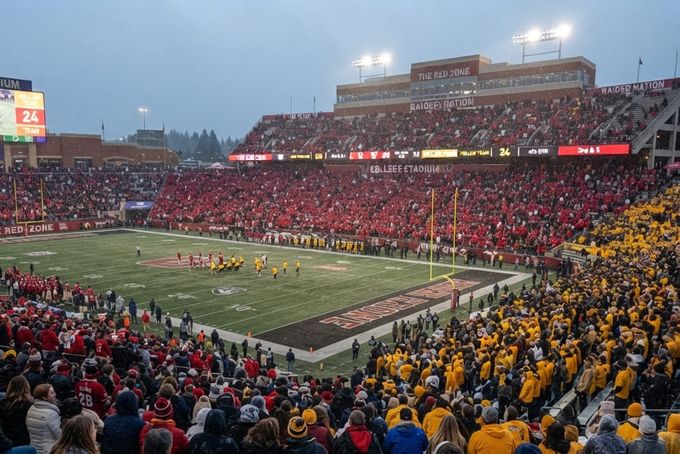
Saturdays give you everything from a 17-13 defensive grind to a 52-49 track meet, sometimes in the same time slot. That range is exactly why college football over/under betting is a different discipline from betting NFL totals. The market is wider, the styles are more extreme, and the mismatches are far bigger. Learn how to read those factors, and the totals board starts making a lot more sense.
How a College Football Total Works
A total, also called the over/under, is a bet on the combined points scored by both teams. The book displays a number, and you decide whether the game ends above or below it.
If the total is 54.5 and the game ends 31-24, that is 55 points, and the over lands. If it ends 27-24, that is 51 and the under lands. Half points prevent pushes. Whole-number totals can push, in which case the stake is returned.
Prices sit close to even on both sides, usually around -110 each way, and shift as the market takes action through the week.
Why College Totals Swing So Much Wider
NFL totals cluster in a fairly narrow band. College football does not. On a single Saturday, you can find totals in the mid 30s and totals in the mid 70s, and both can be correctly priced.
Three things drive that spread. Talent is distributed unevenly, so genuine mismatches happen weekly rather than a few times a season. Schemes are far more extreme, ranging from tempo passing attacks to run-heavy option offenses that barely throw. And rosters are younger and less consistent, which leads to more week-to-week variance.
The practical consequence is that you cannot carry NFL instincts across. A 62.5 total in college is not automatically high. For some matchups, it is conservative.
Tempo Is the Engine
Points come from possessions, and possessions come from pace.
A team that snaps quickly, throws on early downs, and forces the clock to keep moving will play a game with far more possessions than a team that huddles, runs, and drains the play clock. Two offenses with identical efficiency can produce wildly different point totals purely on how many drives each side gets.
When you look at a matchup, start with the pace question rather than the talent question. A fast team against a fast team is the most reliable structural case for an over. A run-heavy, clock-draining team against a defensive opponent is the most reliable case for an under, and the market knows both.
The trap is a fast offense against a slow one. Pace often meets in the middle, and the game plays closer to average than either team's profile suggests.
Mismatches, Blowouts, and Garbage Time
Large point spreads change how the second half is played, and that cuts both ways on a total.
When a favorite is up five scores, starters come off, the offense runs the ball, and the clock stops moving. That suppresses scoring in a way that pure efficiency numbers do not capture. Plenty of blowouts land under a high total because the winning side stops trying to score.
The counterweight is backup-versus-backup football, where two second-string defenses can produce quick scores. Which effect dominates depends on the coach and the situation, which is why blowout spots are genuinely hard to price and often best left alone.
Overtime Does Not Count Toward the Total
This is the single most important settlement rule for college totals, and it constantly catches people out.
College overtime is not a timed period. Each side gets the ball at the opponent's 25-yard line, and in the third overtime, the teams trade two-point conversion attempts. A double or triple overtime game can add a mountain of points to the final score.
None of it counts. BetWhale settles football totals on regulation time only unless a market states otherwise. A game that finishes 24-24 through four quarters and ends 45-38 in the third overtime is graded as 48 points, not 83. If you are betting an over, the fourth quarter is your deadline. Confirm the exact wording in the betting rules before you bet.
Situational Factors Worth Checking
- Weather in northern venues. Late-season games in the Big Ten and elsewhere face the same wind and cold issues as the NFL, and wind matters more than precipitation.
- Altitude. A handful of programs play well above sea level, which affects conditioning and late-game scoring.
- Rivalry and lookahead spots. Emotional rivalry games often play tighter and slower than the numbers suggest. Games sandwiched before a marquee matchup can go the other way.
- Bowl season. Opt-outs, coaching changes, and roster movement make December and January totals unusually hard to project. Confirm who is actually playing before you bet a bowl number.
- Backup quarterbacks. In college, the drop-off from starter to backup is often far steeper than in the NFL, and it moves totals hard.
How to Bet a College Football Total
- Check the total and the price attached to each side.
- Compare it against where the number opened to see which way the market has moved.
- Choose over or under, set your stake, and confirm the slip.
Odds are supplied by Vegas Sportsbook, so pricing tracks the broader US market for both college and NFL betting.
Live Betting College Totals
College games are volatile, which makes them well-suited to in-play betting. A defensive first quarter can drag a live total down far enough to make the over interesting, and a pair of early explosive plays can do the opposite.
The live betting markets reprice as the game unfolds, so you can wait for the tempo to reveal itself instead of guessing at kickoff. In a sport with this much week-to-week variance, that patience is worth something.
Common Mistakes
Applying NFL instincts to a college number is the big one. The scales are different.
Backing an over purely because a team has a high-scoring reputation ignores the opponent, the pace clash, and the game script.
Forgetting the overtime rule is the avoidable one. Points after regulation do not help your over.
Bet Live In-Play CFB
React to early game tempo shifts and score momentum with dynamic live totals.
Take Your Position on Saturday
College football totals reward the bettor who checks pace, personnel, and the weather before checking the reputation. Do that work, and the wildest board in American sports starts to look readable. Get in on the action at BetWhale.
BetWhale is strictly for players aged 18 and over. Gambling carries financial risk, so set your limits and play responsibly. Support and tools are available on the responsible gaming page.
Frequently Asked Questions
What does over/under mean in college football?
It is a bet on the combined score of both teams. You take the over if you think the game finishes above the posted number and the under if you think it finishes below.
Does overtime count toward a college football total?
No. BetWhale settles football totals on regulation time only unless the market says otherwise, and college overtime can add a large number of points that will not count toward your bet.
Why are college football totals so much higher than NFL totals?
Wider talent gaps and more extreme offensive schemes. Tempo passing offenses generate far more possessions than a typical professional game plan, and mismatches are more common.
What happens if the total lands exactly on the number?
A whole-number total that lands exactly on the score is a push, and the stake is returned. Totals with a half point cannot push.
Are bowl game totals harder to predict?
Generally yes. Opt-outs, roster changes, and long layoffs make bowl games less predictable than regular-season matchups, so check the availability news before betting.
Where can I learn about the other markets?
The sports betting guides section covers spreads, moneylines, props, futures, and totals.