
Counter-Strike Eco Rounds & Force-Buys: How the Economy Swings Live Odds
A team's in-game economy directly shapes round outcomes and live odds in Counter-Strike 2. Recognizing full buys, eco rounds, force-buys, and loss bonus dynamics enables sharp bettors to spot value on map winners, total rounds, and live in-play lines.


Published October 19, 2026
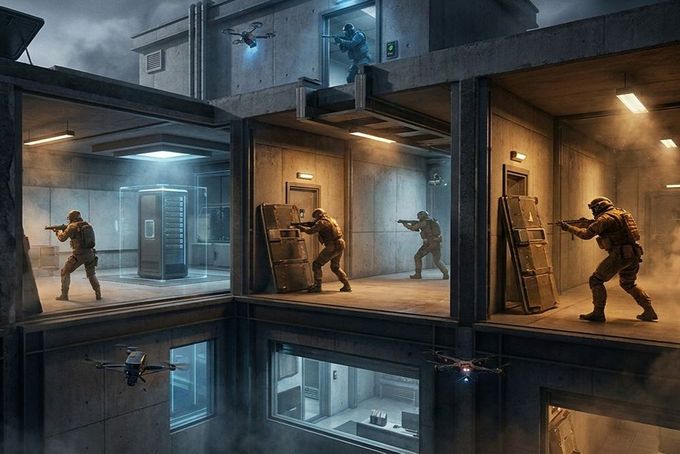
Want an edge when you bet on Counter-Strike live? Learn to read the economy. Every round of Counter-Strike 2 starts with a buy phase, and what each team can afford shapes who is likely to take the round.
Eco rounds, force-buys, and full buys are the rhythm of every map. Once you can spot them, live odds start to make a lot more sense. Here is how the CS2 economy works and how to use it for online esports betting at BetWhale.
How the Counter-Strike 2 Economy Works
Each player in CS2 has a personal bank of in-game credits, which are spent during the buy phase on weapons, armor, and utilities. Every player starts each half with $800, which only covers a pistol, some armor, or a grenade or two. The cap is $16,000 per player, and any amount earned above it is forfeited.
Credits come in three main ways:
- Round rewards. A team that takes a round by elimination or on time earns $3,250 per player. Taking it by bomb detonation or defuse pays $3,500.
- Loss bonus. A team that drops a round still earns credits, and the amount rises with each consecutive loss. It starts at $1,400 and increases by $500 for each loss, up to a maximum of $3,400.
- Kill rewards and objectives. Kills pay a reward that depends on the weapon used. SMG kills pay more than rifle kills, and AWP kills pay the least. If the Terrorists plant the bomb and still lose the round, each player on the team gets an extra $800.
One detail matters a lot for betting. When a team takes a round, its loss bonus does not reset to zero. It drops by one step. A team that has lost several rounds in a row keeps part of its comeback cushion even after it breaks the streak.
The Four Types of Buy
Every buy phase falls into one of four broad patterns, and reading them is the core skill for live CS2 betting.
Full Buy
A full buy means rifles, full armor, and a complete set of utility for all five players, plus defuse kits on the Counter-Terrorist side. It costs roughly $5,000 per player on the T side and more on the CT side. A team on a full buy is at full strength and is usually the favorite against anything less.
Eco Round
An eco round means a team spends little or nothing, keeping pistols and maybe a cheap upgrade. The goal is to save so all five players can full buy next round. A team on a full eco against a full buy is a big underdog for that round, though not without hope, since a couple of early kills can still steal it.
Force-Buy
A force-buy means a team spends nearly everything it has, even though that leaves too little for a full buy next round. Teams force after losing the pistol round to fight back early, at match point, or when they sense the other team is weak. A force-buy is a gamble. If it lands, the momentum swings hard. If it fails, the team is often stuck saving for one or two more rounds.
Half Buy
A half buy sits in between: armor plus SMGs, shotguns, or budget rifles, with some credits kept back. SMG kills pay well, so a successful half buy can speed up a recovery.
How the Economy Swings Live Odds
Live CS2 odds track the economy closely, so knowing what each team can afford helps you judge whether a line has moved too far. Head to the Counter-Strike betting board to see which matches are open.
The Pistol Round Domino
The pistol round opens each half and sets the tone. The winning team can afford better gear for round two, while the losing team usually has to choose between an eco and a risky force. The team that takes the pistol round frequently takes the next two rounds as well. Odds for the map winner tend to shift sharply after round 1 and round 13.
Anti-Eco Rounds
When a team on a full buy faces an eco, the full-buy side is a heavy favorite for that round. This is called an anti-eco round. The value often sits in the next market rather than the round itself, because the line already reflects the gear gap.
The Force-Buy Break
Force-buys create the biggest swings. A successful force can wreck the other team's economy, since its players lose their expensive weapons and have to rebuy. One upset round can flip the map line. If you watch the buy phase and see a team forcing on a strong map, that is a key moment to decide whether you trust the comeback.
Reading the Economic Reset
After a long losing streak, a team's loss bonus reaches its maximum. When it finally takes a round, the bonus only drops one step, so even if it loses the next round, it still collects a large payout and can often buy again. A team down 2-7 with a healthy economy is not always as far behind as the scoreline suggests.
Live Markets That React to the Economy
Market availability varies by match, but these are the ones most affected by the buy phase:
- Map winner: The team that takes the current map. This line moves with every economic swing.
- Total rounds: Over or under on the number of rounds played in the map. Two teams trading force-buys tend to push a map long.
- Round handicap: The favorite must take the map by more than a set number of rounds.
You can follow every live line in the live betting section, and check how esports markets settle on the betting rules page.
Tips for Betting on the CS2 Economy
- Watch the buy phase. Before each round, check what both teams are carrying. Broadcast overlays usually show team funds and loadouts.
- Count the loss bonus. A team on a losing streak may be closer to a full buy than you think.
- Look past the score. A narrow lead built on eco rounds is weaker than one built against full buys.
- Stay disciplined. Economic swings happen fast. Set your stake before the map starts and avoid chasing a bad read.
Read the Buy, Make the Call
The economy is the heartbeat of Counter-Strike. Learn to read it, and every buy phase becomes a betting opportunity. Jump in and bet on Counter-Strike live from your browser with no app needed. LET'S PLAY!
Must be 18+ to play. Please bet responsibly and visit our responsible gaming page for tools to manage your play.
Frequently Asked Questions
What is an eco round in Counter-Strike?
An eco round is when a team spends little or nothing so it can afford a full buy in the next round. Players usually keep pistols and skip rifles and heavy utility.
What is a force-buy in CS2?
A force-buy is when a team spends almost all of its credits on a round, even though it will not be able to full buy next round. It is a high-risk move to break momentum or claim a key round.
How does the loss bonus work in CS2?
The loss bonus starts at $1,400 and rises by $500 for each consecutive round lost, up to $3,400. Taking a round lowers it by one step instead of resetting it.
Why do live odds change so much after the pistol round?
The pistol round winner can usually afford better weapons for the next rounds, while the loser often has to save. That economic edge makes the pistol winner more likely to take several consecutive rounds.
Can I bet on Counter-Strike matches live at BetWhale?
Yes. Live markets are offered on selected Counter-Strike matches, so you can react to the economy and momentum as a map unfolds.